Young people bring faith, simplicity to meditations for papal Via Crucis

March 25, 2018 CNA Daily News 0

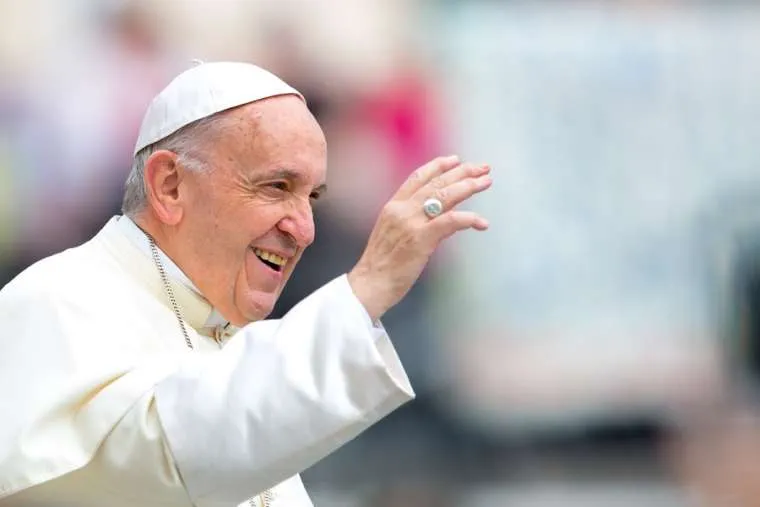
Rome, Italy, Mar 25, 2018 / 03:02 pm (CNA/EWTN News).- As the Vatican gears up for the Synod on youth in October, Pope Francis has chosen a group of Italian high school students to write the meditations for his Good Friday Way of the Cross at the Colosseum.

The Pope tasked religion teacher Andrea Monda with choosing and coordinating the 15 students, who attend a classical high school in Rome.

Marta Croppo, 18, is writing the meditation for the 14th station, when Christ’s body was laid in the tomb.

She told CNA March 23 that she thinks Pope Francis wanted young people to write the meditations because of their simplicity and their ability “to communicate another type of message to the world.”

“We are not scholars, and we do not have a theological degree or something like that,” she noted. Therefore, this is “a great occasion for us to talk with simplicity,” relying on our experience of faith and religion in daily life.

Croppo said that in her meditation she did not want to speak about a social problem or “send a message to youth,” but to reflect on more existential themes. “I wanted to emphasize the human side of Jesus, because he is God, but he is human as well,” she said.

“He has suffered, and he has died just like us, so I wanted to talk about this aspect and the fact that he’s very near, [that] he comprehends deeply our condition of suffering and of sorrow.”

In the 10th station Jesus is stripped of his garments. Greta Giglio, 18, said that in her reflection on this station she tried to address present issues, such as immigration, because “immigrants, like Christ in that specific moment, come lacking everything.”

Monda said that he sees the Pope’s choice to entrust young people with the Via Crucis reflections as being in line with the greater focus of his pontificate, “trying to give a voice to those who have no voice.”

In Monda’s view, young people are also often at the peripheries. But Pope Francis says not to speak only about youth or to youth, but to “let the youth talk and then listen to them.”

The last time the reflections for the Via Crucis were written by young people was in 2013, when Benedict XVI asked youth from Lebanon to write them after visiting the country the previous September.

Those meditations were written by 45 young Lebanese between the ages of 17 and 30 and were focused on unity and peace between Christians and Muslims.  

In 2017 the meditations were written by French biblical scholar Anne-Marie Pelletier, who was the fourth woman to do so after St. John Paul II first started the practice, inviting Mother Anna Maria Canopi from the Benedictine abbey “Mater Ecclesiae” in 1993.

In recent years they have mostly been penned by Italian bishops; notably, in 2015, they were written by Bishop Emeritus Renato Corti of Novara, who preached the final Lenten spiritual exercises for St. John Paul II the week before his April 2, 2005 death.

The Roman tradition of holding the Way of the Cross at the Colosseum on Good Friday goes back to the pontificate of Benedict XIV, who died in 1758.

After dying out for a period, the tradition was revived in 1964 by Bl. Paul VI, while under St. John Paul II the Way of the Cross at the Colosseum became a worldwide television event; the Pope himself used to carry the cross.

Now the cross is usually carried by individuals and families – including religious and laity – from around the world.

The Pope personally selects who writes the meditations for the stations, and the choice can indicate issues the Pope wants to zero in on.

In 2017, the Via Crucis at the Colosseum was attended by around 20,000 people.

[…]

Nothing can stifle the joy of the Gospel, Pope says on Palm Sunday

March 25, 2018 CNA Daily News 1

Vatican City, Mar 25, 2018 / 04:09 am (CNA/EWTN News).- Jesus was the first target of “fake news” spread by those who wanted spin and twist his message for their own benefit, Pope Francis said Palm Sunday, but stressed that despite the pride and skepticism of some, nothing can dampen the joy of Christ’s message or his Resurrection.

On the cross, Jesus died “crying out his love for each of us: young and old, saints and sinners, the people of his times and of our own,” the Pope said March 25.

“We have been saved by his cross,” and despite the coldness and skepticism of some, “no one can repress the joy of the Gospel; no one, in any situation whatsoever, is far from the Father’s merciful gaze.”  

Pope Francis spoke to pilgrims present for his Palm Sunday Mass in St. Peter’s Square. He began the liturgy at the obelisk in the center of the square, where he blessed the palms and olives to be used in the celebration. He then processed to the main altar and began Mass.

Palm Sunday also coincided with the diocesan celebration of World Youth Day, which this year holds the theme “Do not be afraid Mary, for you have found favor with God.”

It also marked the end of the March 19-24 pre-synodal meeting in Rome, which gathered some 300 youth from around the world and drew participation from an additional 15,000 on social media. The event served as a precursor for the October synod of bishops on “Young people, faith and the discernment of vocation.”

At the end of Sunday’s liturgy, young people presented Pope Francis with their conclusions, which were complied into a 16-page final document based on discussions held throughout the week.


Listening to the reading of the Passion of the Lord #PopeFrancis #PalmSunday pic.twitter.com/K5yfW2d78v

— Catholic News Agency (@cnalive) March 25, 2018


In his homily, Pope Francis said the account of Jesus’ entrance into Jerusalem evokes a range of different and at times contradictory sentiments, including love and hatred, self-sacrifice and indifference; the joy of those who welcome Jesus and the bitterness of those who want him crucified.

The sense of love and joy conveyed in the passage is reminiscent of all those “living on the edges” of society or who have been “left behind and overlooked,” but who have also been touched, healed or forgiven by God in some way.

In contrast, this joy, Francis said, is a source of “scandal” for those who consider themselves faithful to the law and its precepts, and it is “unbearable for those hardened against pain, suffering and misery.”

“How hard it is for the comfortable and the self-righteous to understand the joy and the celebration of God’s mercy! How hard it is for those who trust only in themselves, and look down on others, to share in this joy.”

The cry of those who shout “crucify him!” the pope said, is the voice “armed with disparagement, slander and false witness. It is the voice of those who twist reality and invent stories for their own benefit, without concern for the good name of other.”

Francis said people with this attitude have no problem “spinning facts” and making Jesus look like a criminal. As a result “hope is demolished, dreams are killed, joy is suppressed; the heart is shielded and charity grows cold.”

However, faced people who have this attitude, the best remedy, the pope said, “is to look at Christ’s cross and let ourselves be challenged by his final cry,” which Jesus made as he died for each and every person.

Looking to the cross means to challenge and question oneself about one’s actions and choices, including the sensitivity to those who are experiencing difficulty, the pope said, asking: “Where is our heart focused? Does Jesus Christ continue to be a source of joy and praise in our heart, or does its priorities and concerns make us ashamed to look at sinners, the least and forgotten?”

Speaking directly to the young people present, Pope Francis said that like the Pharisees who told Jesus to “rebuke your disciples,” there are also people who try to silence and exclude the youth.

“There are many ways to silence young people and make them invisible. Many ways to anesthetize them, to make them keep quiet, ask nothing, question nothing. There are many ways to sedate them, to keep them from getting involved, to make their dreams flat and dreary, petty and plaintive,” he said.

However, pointing to Jesus’ response that “if these were silent, the very stones would cry out,” Francis told youth not to give into the pressure to stay quiet, because “you have it in you to shout.”

“It is up to you not to keep quiet,” he said, and “even if others keep quiet, if we older people and leaders keep quiet, if the whole world keeps quiet and loses its joy, I ask you: Will you cry out?”

After Mass Pope Francis led pilgrims in praying the Angelus, asking that Mary would help each person to live Holy Week well. “From her we learn the interior silence, the gaze of the heart and loving faith to follow Jesus on the path of the cross, which leads to the joyful light of the Resurrection.”

<blockquote class=”twitter-tweet” data-lang=”en”><p lang=”en” dir=”ltr”>&quot;Dear young people, you have it in you to shout. It is up to you to opt for Sunday’s 'Hosanna!', so as not to fall into Friday’s 'Crucify him!'&quot; <a href=”https://twitter.com/hashtag/PopeFrancis?src=hash&amp;ref_src=twsrc%5Etfw”>#PopeFrancis</a> <a href=”https://t.co/6IaPjO5hGY”>pic.twitter.com/6IaPjO5hGY</a></p>&mdash; Catholic News Agency (@cnalive) <a href=”https://twitter.com/cnalive/status/977837199315099648?ref_src=twsrc%5Etfw”>March 25, 2018</a></blockquote>
<script async src=”https://platform.twitter.com/widgets.js” charset=”utf-8″></script>

[…]

This Sunday, where will the millions of palms come from?

March 24, 2018 CNA Daily News 0

Washington D.C., Mar 25, 2018 / 12:03 am (CNA/EWTN News).- With the arrival of Palm Sunday, Catholics across the globe will soon be handed leaves as they walk into church. Some might fold them into elaborate little crosses. Kids will poke each other with them. But it’s safe to say most won’t know where they came from.

The feast commemorates Jesus’ triumphant entry into Jerusalem the week before his passion and crucifixion. The Gospels attest that as Jesus entered the city, crowds lay down palm branches and cloaks as he rode into Jerusalem on a donkey.

For centuries, Christians have commemorated the feast day that begins Holy Week by waving branches of either palm or another local tree, as well as with liturgical processions and other celebrations.

In the U.S. alone, nearly 18,000 Catholic parishes will celebrate Palm Sunday by blessing and distributing palm branches to the faithful. That makes millions of palm leaves each year – and that doesn’t include all of the Protestant churches that observe the tradition.

Where do all those palms come from? While many Catholics know the final destination of their palms – they are burned to become ashes for next year’s Ash Wednesday – the origin of the leafy branches is less well known.

Credit: Klara Sasova / Unsplash

The journey from tree to church begins with the harvesters around the world who cut and prepare the leaves for their role in worship. The work needed to provide palms for Palm Sunday is so immense that it actually constitutes a full-time year-round job for some harvesters.

Thomas Sowell is one such palm harvester from Florida who has been helping to supply parishes with fresh palm leaves for more than five decades. Sowell began harvesting wild palm leaves from trees as a child to earn extra money in the springtime. Over the past several decades, he has grown his business into a palm supplier that ships the leafy branches to all 50 states and Canada.

Despite the growth in his business, Sowell says he tries to maintain his focus on the purpose behind it all.

“We try to do the best job that we can,” he told CNA. “Every bag that we send out to churches, every individual bag has been examined, cleaned – we go to extreme measures to make sure that everything we do for these churches is done in the honor of Jesus Christ.”

While there are more than 2,600 different species of palm that grow across the world, palm plants cannot survive outside of tropical and subtropical climates. Historically, parishes that could not source palm locally would instead substitute branches of another local tree such as olive or willow, although modern churches also have the option of sourcing palm fronds from other regions of the world.

In the United States and Canada, most parishes seek out suppliers who deliver fresh palms shortly before Palm Sunday, said Fr. Michael J. Flynn, Secretariat of Divine Worship for the U.S. Conference of Catholic Bishops.

Many of these parishes contact church goods suppliers such as Peter Munley of Falls Church, Virginia, who helps provide parishes year-round with supplies like candles and sacramental wine, along with palms for Holy Week.

Munley told CNA that in preparation for Palm Sunday, he works to deliver palms from their source to different parishes that place orders around the country. In addition to Florida, palms are sourced from Texas, California and elsewhere in the Southern United States, he said.

While nearly all of the palms Munley sells are individually pre-cut, church goods suppliers also helps to source decorative palms for altar centerpieces and larger palm fronds as well. Dealers also work to ensure that palms get burnt and ground into ashes for Ash Wednesday, for parishes that cannot burn the palms for ashes themselves.

Munley also stressed that although many American-based palm sources are not labeled as “eco-friendly,” the practices of many major U.S. palm harvesters are indeed environmentally sustainable.

“Our guys don’t kill the palm,” he said, adding that by sourcing palms from American harvesters as opposed to internationally-certified “green” farmers, they help to reduce the ecological impact of shipping and transportation.


Credit: Bohumil Petrik/CNA.

Sowell said that the palm trees he works with “are 100 percent wild.” He works with local ranchers and landowners to remove palmetto leaves from trees that grow naturally on local farmland.

Some of the trees Sowell harvests from have been producing palm leaves since he first started gathering palm leaves to sell as a boy.

“I know that there are trees that are still being cut today that I cut when I was twelve,” he said.

Originally, Sowell cut everything himself. Over the years, however, his growing cooperation with the caretakers who supply palm led him to focus more on preparing palms for church supply dealers and for shipment.

Cooperation with ranchers and landowners is critical. Sowell says the process of cutting, cleaning and preparing the strips of palm is incredibly labor intensive, and he could not complete it without local partnerships. “There’s no way that you could grow this much palm and just do it (alone). It’s hard.”

The work is so intensive that the Palm Sunday celebrations require an entire year’s work. “We work twelve months out of the year, in one aspect or another, for one day,” Sowell said.

He also supplies palm leaves for Eastern Orthodox Churches, which use a different calendar for Easter and Lent. After the celebration of Palm Sunday in the Catholic Church and other Western churches, “we’ll turn around in a couple of weeks and gather more palms so they’re fresh for the Orthodox,” he said.

The participation of Christians in Palm Sunday celebrations not only provides work and a living for Sowell and his employees, but financial support for the local ranchers who work with him.

“There are so many families that help us that can earn money in a way that otherwise they couldn’t.”

Ultimately, Sowell sees his job harvesting and preparing palm leaves – and the service he is able to offer to parishes across the country – as a blessing.

“There would have been no way we could have done this if it hadn’t been for God helping us,” he said.


This article was originally published on CNA March 16, 2016.

[…]

Australian court hears further testimony in Cardinal Pell abuse hearing

March 24, 2018 CNA Daily News 0

Melbourne, Australia, Mar 24, 2018 / 04:06 pm (CNA/EWTN News).- New accusations were brought forward and others were dropped this week, during a pre-trial hearing in an Australian court regarding abuse allegedly committed by Cardinal George Pell.

The committal hearing for the Prefect of the Secretariat for the Economy took place at the Melbourne Magistrate Court, and will allow magistrate Belina Wallington to determine whether there is enough evidence for a jury trial.

The total number of charges brought against Pell are not public, although some of the charges previously brought against Pell date as far back as 1961. In January, a key charge against Pell was dropped after the complainant died of leukemia.

Pell, 76, is being represented by four lawyers and intends to plead not guilty if his case goes to trial. He has said that “the whole idea of sexual abuse is abhorrent to me.”

Last summer, Pope Francis granted Pell a leave of absence from his duties as prefect of the Secretariat for the Economy while the claims are investigated. Pell is also a member of the Pope’s council of nine cardinal advisers.

Prosecutors said March 23 that some charges against Pell will be dropped because a witness is unable to testify because they are “medically unfit to give evidence.”

The court also heard this week from family members of people against whom Pell allegedly acted inappropriately at a public swimming pool, a showering area, a movie theater, and a church. Other witnesses denied having ever seen Pell acting inappropriately.

The Vatican has refrained from stating a judgement or opinion on the Pell case, pending the outcome of the investigations by the Australian court.

The cardinal’s hearing, which began March 5, is scheduled to conclude March 29.

[…]

Chilean pregnant mothers pay unique tribute to unborn children

March 23, 2018 CNA Daily News 0

Santiago, Chile, Mar 24, 2018 / 12:00 am (CNA/EWTN News).- Pregnant mothers carrying children, volunteers, and staff of the Chile United Foundation celebrated the Day of the Unborn Child and Adoption on March 22 in front of Chile’s presidential palace.

For four years the NGO has gathered there to hand out carnations to passersby and to give them a message of hope, as a tribute to the unborn children they carry in their womb.

Chile passed a law  Sept. 23, 2017 permitting abortion if an unborn child is judged to be “non-viable,” if a pregnancy poses risk to the life of the mother, and in cases of rape.

Initiatives like Chile United’s celebration demonstrate that it is necessary to “continue working day and night with more effort than ever to be there for the woman in that crucial moment,” Veronica Hoffman, executive director of Chile United, told ACI Prensa, the Spanish-language news partner of CNA.

“When you give emotional support, welcome, and accompany her, women decide to continue with pregnancy,” Hoffman said.

“What we are calling for today is to strengthen support programs nationwide,”she added.

Chile United has programs of support for women and their children, but the recently passed abortion law also requires government support for women who chose to continue with a pregnancy.

The Chile United Foundation has been working for 19 years for the development of social and cultural values for human progress in the country. Their efforts include a support program for women in crisis pregnancies, which has supported the birth of some 5,000 children, such as Yasna Gonzalez’s child.

Yasna told ACI Prensa that after overcoming cervical cancer, she went through a difficult pregnancy with her fourth child when she was 43. Her husband and some of the children reproached her, and even her boss at work advised her to abort.

In a moment of anguish, she said she found the Chile United Foundation. “They gave me everything, all the love, the emotional support, to be able to have my child,” she said.

Today Yasna tearfully recalls that period, but “I see my child who’s already six and he is everything for me, he’s my little piece of heaven,” she said.

Another woman at the demonstration told ACI Prensa that she is 38 weeks pregnant, she does not have any relatives in Chile, and she already has a seven-year-old child.

For her, the Chile United Foundation is “like a family” that has protected her, helped her to find a job and, and provided material assistance.

Passerby Kristli Guerrero was delighted to get the carnation. “What they’re doing is a beautiful thing and there ought to be more awareness, more programs,” she said.


This article was originally published by our sister agency, ACI Prensa. It has been translated and adapted by CNA.

[…]

What the ‘Great Firewall’ might signal for Vatican-China deal

March 23, 2018 CNA Daily News 1

Washington D.C., Mar 23, 2018 / 09:47 pm (CNA/EWTN News).- As the Chinese government tightens control over religious groups in the country, experts caution that the country seems positioned to further restrict religious freedom, following the model of government-run social media.

While introducing more restrictive rules on religious practice, President Xi Jinping’s repeatedly stated goal has been the “Sinicization” of religions, or to diffuse “religious theories with Chinese character” into the five official religions supervised by the government, including the Chinese Catholic Patriotic Association.

On March 22, China instituted a major change in its religious oversight by abolishing the State Administration for Religious Affairs and shifting direct control to the Chinese Communist Party’s United Front Work Department (UFWD). As a result, the Chinese Catholic Patriotic Association will now be under the day-to-day direct supervision of the Chinese Communist Party (CCP). This is similar to another bureaucratic change in China earlier this week, that gave the CCP direct control of movies, television, books, and radio.

“They are folding the state into the party … It is one thing when the party does that with regards to the media, but there is something particularly ironic now in the sense that you have a department of an avowedly Marxist atheist communist party that is going to be managing religious affairs,” said Freedom House’s Senior Research Analyst for East Asia, Sarah Cook.

“Now the Bishops’ Conference is even less explicitly autonomous and more clearly directly managed by an atheist communist party department,” said Cook. This change could result in more pressure for religious entities in China to make clear that their first and foremost allegiance is to the party and not to their religion.

The UFWD is the CCP’s “soft power” instrument for “winning the hearts and minds” for China’s political goals at home and abroad, according to the Financial Times. It seeks to manage groups outside of the CCP, including Hong Kong, Taiwan, Tibet, Xinjian, ethnic minorities, and religious groups.

The UFWD is “basically trying to make sure that these entities are also in some way following the party line even though they are not part of the communist party itself,” explained Cook.

China has long been known for its strict control of information, through means including internet access restriction and the creation of alternative social media platforms that are completely controlled by government surveillance and censorship.

So while Twitter is inaccessible in China – blocked along with Google, Facebook, and YouTube by “the Great Firewall” – one can express himself in 140 characters or fewer on the Chinese website “Sina Weibo” instead, as long as the message is not critical of President Xi Jinping.

Critics fear this model could increasingly be adopted in the realm of religion as well.

The Vatican has been in negotiations with Xi’s regime on the appointment of bishops. Some speculate an agreement will resemble the Vatican’s deal with Vietnam, in which the Holy See picks bishops from a selection of candidates proposed by the episcopal conference, which, as of this week, is more directly controlled by the CCP.

As the Vatican considers the possibility of a deal with the Chinese regime, China-watchers are warning technology companies that engaging directly with the Chinese government could lead to their complicity with censorship and surveillance, or lead to the arrest of Chinese citizens.

One early example of this was Yahoo, which provided sensitive information about writers to the Chinese authorities. More recently, Apple removed VPN software that helped Chinese citizens circumvent its Great Firewall from its China App Store.

Formerly, technology “companies had good faith that by going in there [China] they really were helping to provide these open platforms for communication … It would be very difficult to make that argument right now,” explained Shanthi Kalathil, the director of the International Forum for Democracy Studies at a panel on PEN America’s new report on social media censorship on March 19.

“All of the trends are pointing in a negative direction. The intent of the Chinese government is clear that anybody that does go in will absolutely not have the space to provide what these companies may profess to be providing on paper. We know enough now about both the censorship machine as well as Xi Jinping’s intentions – I think that’s been made quite clear,” continued Kalathil, referring to the increase in censorship, surveillance, and punishment of Chinese social media users in the past three years.

China has increasingly used its control of domestic social media alternatives to criminalize internet users who express dissenting opinions.

In China, people talk about how “it used to be that we afraid that our account would be closed or our posts would be deleted. Now we are afraid that we are just going to be taken away. Some are sentenced to administration detention for a few days, but there are a good number of people who have been sentenced to very long prison terms,” Cook said at the panel.

The trends in freedom of religion are similarly pointing in a negative direction under Xi Jinping.

An analysis published by a Chinese Communist Party think tank scholar in 2012 identified both religion and “internet freedom” as future threats to China’s rise. The years that followed saw crackdowns on both freedom of the internet and religious freedom.

No member of the Chinese Communist Party is allowed to practice a religion. In March, the same parliamentary meeting that gave Xi Jinping lifelong rule also granted the atheist Communist party direct oversight of the Chinese Catholic Patriotic Association.

According to the latest reports, a deal between the Vatican and Beijing could be signed as early as next week.


[…]

California high school student planning pro-life walkout

March 23, 2018 CNA Daily News 0

Sacramento, Calif., Mar 23, 2018 / 01:56 pm (CNA/EWTN News).- Students at a public school in California are organizing a pro-life walkout, similar to the recent walkouts over gun control, in honor of unborn babies who have been aborted.

The pro-life walkout will take place at Rocklin High School in Rocklin, Calif., a Sacramento suburb, April 11.

The walkout, similar to the recent walkouts over gun control in honor of the Parkland shooting victims in Florida, and will last 17 minutes. The event will be promoted by students with #life.

The organizer of the walkout, Rocklin High student Brandon Gillespie, said he hopes the event will “honor all the lives of the millions of aborted babies every year,” according to local news.

“We encourage students across the country to participate in a stand for #life,” Gillespie said in a March 22 Tweet.

Gillespie noted that he was inspired by his history teacher, Julianne Benzel, to jumpstart the pro-life walkout.

Benzel recently highlighted the nationwide walkouts over gun control in her classroom and asked her students to consider what the limits might be over protests on school grounds and if there was a double-standard.

“If schools, not only just our school and our administration, but across the country are going to allow one group of students to get up during class and walk out to protest one issue, would they still give the same courtesy to another group of students who wanted to protest… abortion?’ Benzel told Fox & Friends.

“If you’re going to allow students to get up and walk out without penalty, then you’re going to have to allow any group of students that wants to protest,” Benzel continued.

Soon after her classroom discussion, Benzel was placed on paid administrative leave after a few students and one parent filed a complaint to the school against her.

District spokesperson Diana Capra said that Benzel was “not penalized or placed on leave because of her viewpoints,” but her leave was “due to complaints from parents and students involving the teacher’s communication regarding…the student-led remembrance activities.”

Despite the controversy, Rocklin students are moving forward with their pro-life walkout in a few weeks and have encouraged other students around the nation to join the walkout for life.

Gillespie met with Rocklin High School’s principal the morning of March 23, but has yet to announce any updates to the walkout’s status since then.

<blockquote class=”twitter-tweet” data-lang=”en”><p lang=”en” dir=”ltr”>I just got done with the meeting with my principal. I will be updating the status of the <a href=”https://twitter.com/hashtag/life?src=hash&amp;ref_src=twsrc%5Etfw”>#life</a> walkoout soon.</p>&mdash; Brandon Gillespie (@bgillie13) <a href=”https://twitter.com/bgillie13/status/977198964771450880?ref_src=twsrc%5Etfw”>March 23, 2018</a></blockquote>
<script async src=”https://platform.twitter.com/widgets.js” charset=”utf-8″></script>

[…]